White Gold
Metals, Futures, and African Safaris

“Price is what you pay. Value is what you get.”— Warren Buffett
China’s ascent to the summit of the electric vehicle industry ranks among the most astonishing industrial achievements of the modern era. Rarely in economic history has a nation moved from peripheral player to undisputed champion with such speed. Of the roughly 74 million electric vehicles currently operating worldwide, nearly 44 million reside on Chinese roads. More remarkably, China is simultaneously the world’s largest EV market and its dominant manufacturer, responsible for approximately 73% of global production.
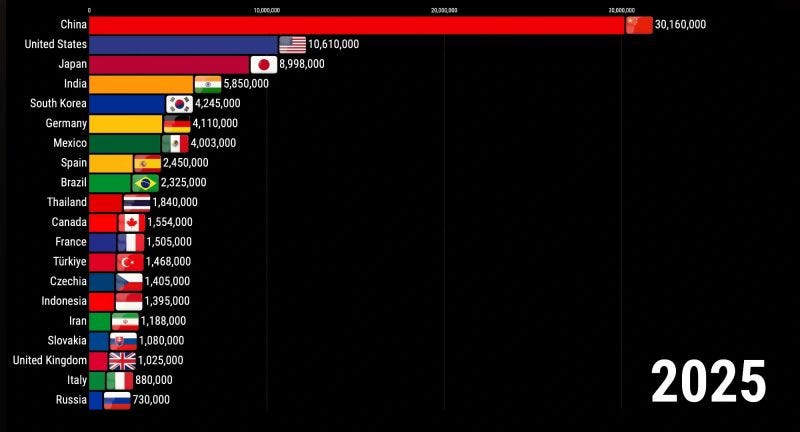
Yet even these figures understate the scale of the phenomenon. Expand the definition of electrified transport to include scooters, mopeds, and e-bikes, and the numbers become almost absurd—China alone hosts roughly 444 million such vehicles. For perspective, total global motor vehicle production of all types hovers around 92 million vehicles per year. China contributes approximately 34 million of those units, while the United States, in a distant second place, manufactures roughly 10 million. All praise the Church of Carbon; its most devoted disciple may well have become its greatest disruptor—pun intended.
What may surprise casual passanger is that China never achieved comparable dominance in the internal combustion engine (ICE) era. This was not for lack of ambition. Rather, it was a lesson in the unforgiving power of the unyielding laws of physics and institutional compounding. Companies such as Toyota and Mercedes-Benz spent more than a century refining the dark arts of thermodynamics, metallurgy, combustion control, and transmission engineering. The resulting moat consisted not merely of patents, but of institutional knowledge layered upon institutional knowledge—millions of engineering decisions compounded over generations.
Beijing attempted to shortcut the process through joint-venture requirements, compelling foreign automakers to partner with domestic firms. The strategy succeeded in attracting factories and creating employment, but largely failed to transfer the crown jewels. Foreign manufacturers guarded their most valuable intellectual property with religious zeal, while many domestic firms became comfortable collecting profits behind protected market walls rather than mastering the brutal realities of engine development. Building a world-class internal combustion engine is not unlike learning to play concert piano; observing the performance is not the same as acquiring the skill.
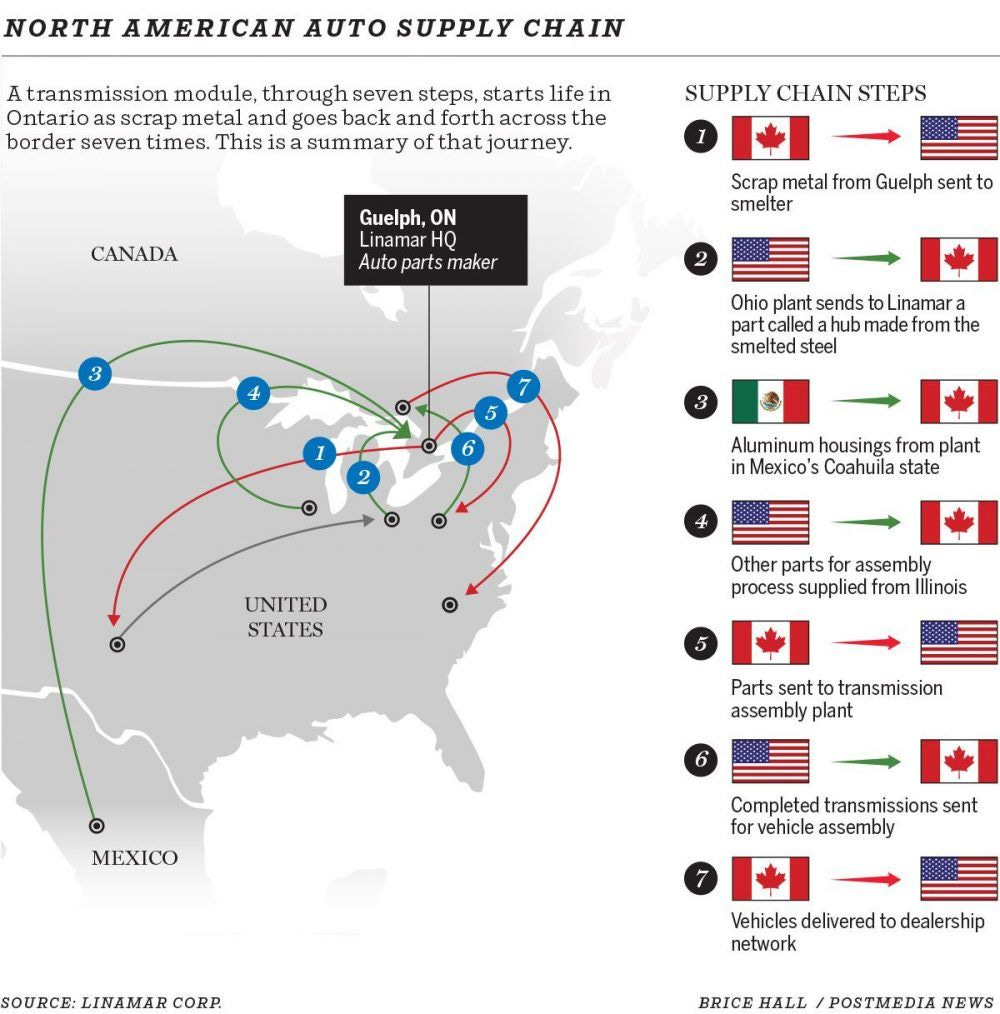
The complexity of the legacy automotive supply chain further reinforced incumbent advantages. It is often estimated that a vehicle assembled in North America sees components cross international borders half a dozen times before final assembly. Such deeply integrated ecosystems cannot simply be decreed into existence.
Recognizing they were playing a game whose rules had been written by others a century earlier, Chinese policymakers made a remarkably pragmatic decision: they changed the game entirely.
Rather than continue chasing Western and Japanese manufacturers around the combustion racetrack, Beijing redirected vast amounts of capital toward electric vehicles. In doing so, it shifted the basis of competition away from crankshafts, pistons, and transmissions and toward batteries, power electronics, software, and supply-chain orchestration. A contest in which China was decades behind became one in which the starting gun had only recently fired. Through subsidies, industrial planning, and relentless scale, China effectively compressed a century of automotive catch-up into a single generation.
Yet even this explanation misses a crucial chapter in the story.
