Pass the Salt
How Britain lost it's chemical industry

“Gradually, then suddenly.”— Ernest Hemingway
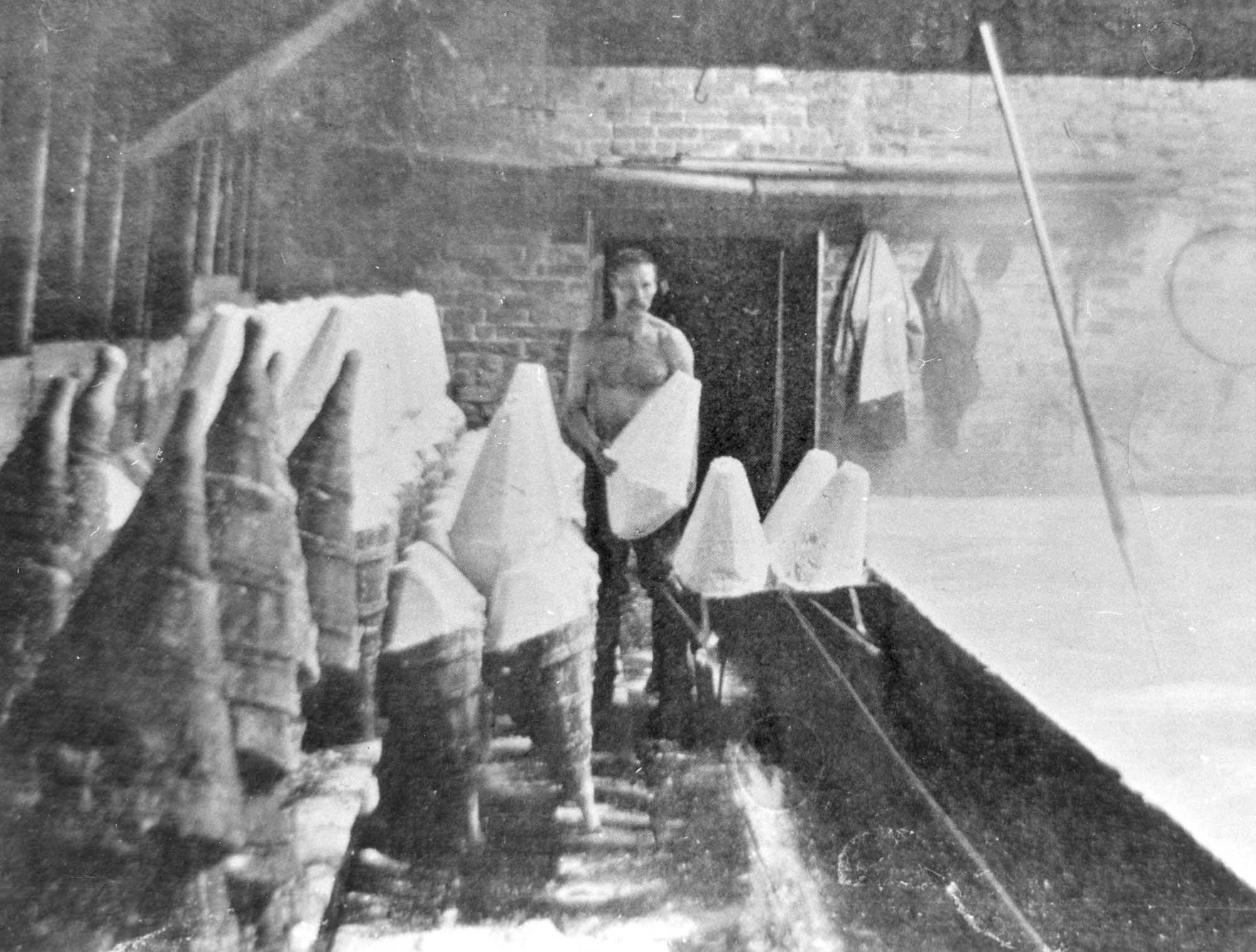
For most of its rise, the British Empire understood something modern Britain appears to have forgotten: power begins with the cheapest inputs.
Before refrigeration, salt preserved food for long naval voyages and global trade. It made meat storable for armies, cities survivable through sanitation, and fleets capable of remaining at sea for months rather than weeks. It disinfected wounds, treated water, cured hides, and fed early chemical processes that underpinned glassmaking, textiles, soap, and metallurgy. Salt became one of the first truly global commodities not because it was rare, but because it solved the logistics of scale.
This mattered most at sea. In 1793, as Britain faced Napoleonic France, the Royal Navy was not powered by cannon alone. HMS Victory sailed with roughly 4,000 barrels of salted pork and beef, each preserved with brine ratios refined over centuries. Without salt, Nelson’s fleet could not have remained operational beyond a short cruise. With it, Britain could project force indefinitely. By the turn of the nineteenth century, Britain was producing on the order of 100,000 tons of salt annually, roughly half of it destined for naval provisioning. Endurance was not a tactical detail, it was strategy.
Cheshire brines fed Liverpool ports. Canal barges hauled white crystals inland. Provisioning became predictable, repeatable, and scalable. This was not merely logistics. It was sovereignty reduced to a molecule.
Britain’s advantage was never simply that it possessed salt. It was that it could produce it cheaply, move it efficiently, and integrate it into a growing industrial system. Inland brine fields, canals, and later railways collapsed distance and cost. Salt moved from ground to furnace to factory with minimal friction. By the eighteenth century it had ceased to be merely a preservative and had become a feedstock. Alkalis followed. Then chlorine. Then acids. What began as logistics became chemistry, and chemistry became industrial power.
None of this was accidental. The British state understood that mastery of basic materials created leverage everywhere else. Naval power required preservation of food. Urbanization required sanitation. Manufacturing required alkalis and acids. Empire required all three operating together.
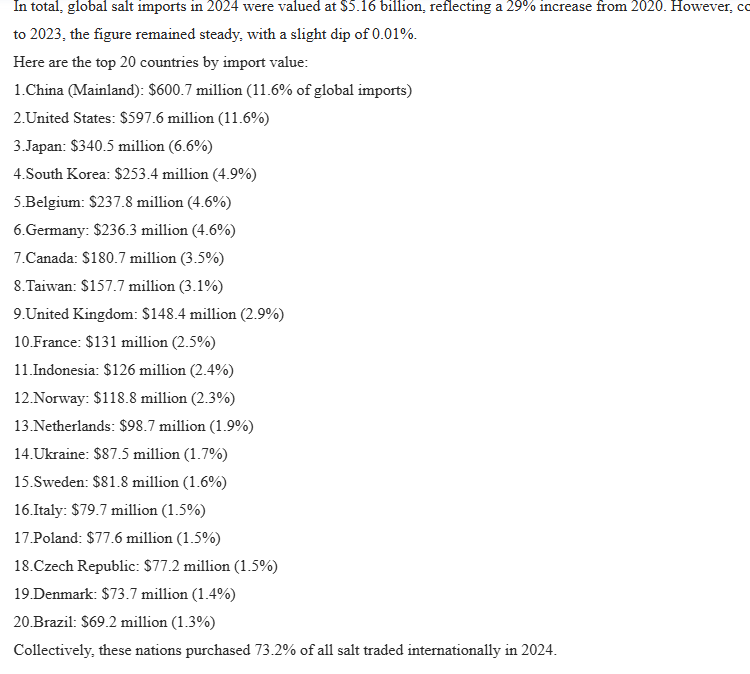
The modern inversion is therefore revealing. The United Kingdom, still an island, still surrounded by brine, still sitting atop workable salt deposits, has become a net importer of salt. What changed was not geology but policy, cost structure, and industrial priority. A country that once treated the cheapest molecule in the economy as strategic infrastructure now imports it as a commodity.
This is not, at root, a salt story. It is a competitiveness autopsy of a nation that built an empire on logistical and industrial basics, but can no longer reliably produce the most elementary input of chemical civilization. Nowhere is that dependency more dangerous than in the industry that makes everything.
