Coup d'état
The United States take over of the Canadian Oil Sands

“The supreme art of war is to subdue the enemy without fighting.” Sun Tzu
When Doomberg first warned that Mark Carney might one day become Prime Minister of Canada, readers assumed it was a rhetorical flourish—a commentary on a country that had forgotten the difference between managing a balance sheet and managing a resource empire. The point was never that Carney personally mattered. It was that a technocratic political class, fluent in transition jargon but tone-deaf to hard energy arithmetic, would eventually sleepwalk past its own national advantage. A nation that behaves as though oil and gas are an inconvenience will one day discover that the world has quietly claimed them.
By 2025, the warning had matured into something more concrete. Carney arrived promising to make Canada an energy superpower, but the real beneficiaries of this supposed renaissance are not Canadian. While the media fixates on Venezuela’s potential “re-normalization” with the United States or Mexico’s Pemex fiscal collapse, a far larger realignment has already occurred in silence: the United States has financially annexed the Canadian oil sands, the only large, geopolitically stable heavy-oil reserve accessible to the West.
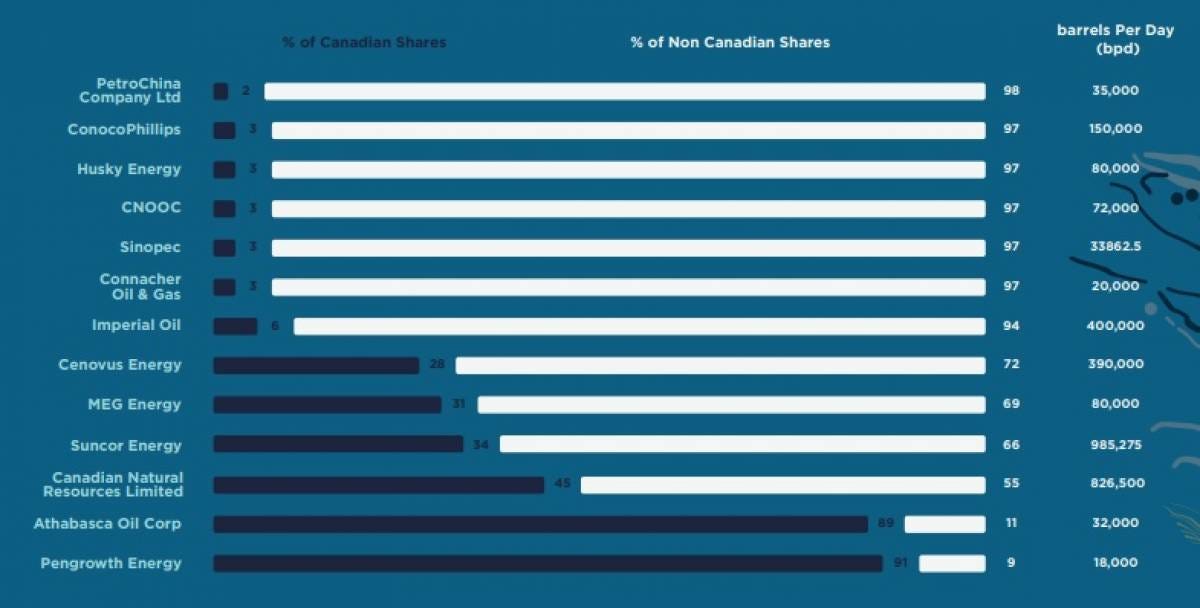
The ownership data is both well-known and still underappreciated. U.S. funds now own roughly 59 percent of Canadian oil and gas companies, up from 56 percent at the end of 2024, while Canadian ownership has fallen from 37 to 34 percent. These are not diffuse mutual fund positions; they are decisive control blocks. Tamarack Valley saw its U.S. ownership rise from 20 to 40 percent. Americans now control nearly two-thirds of Whitecap. When shareholders in New York own the upstream, Ottawa can make speeches but cannot make strategy.
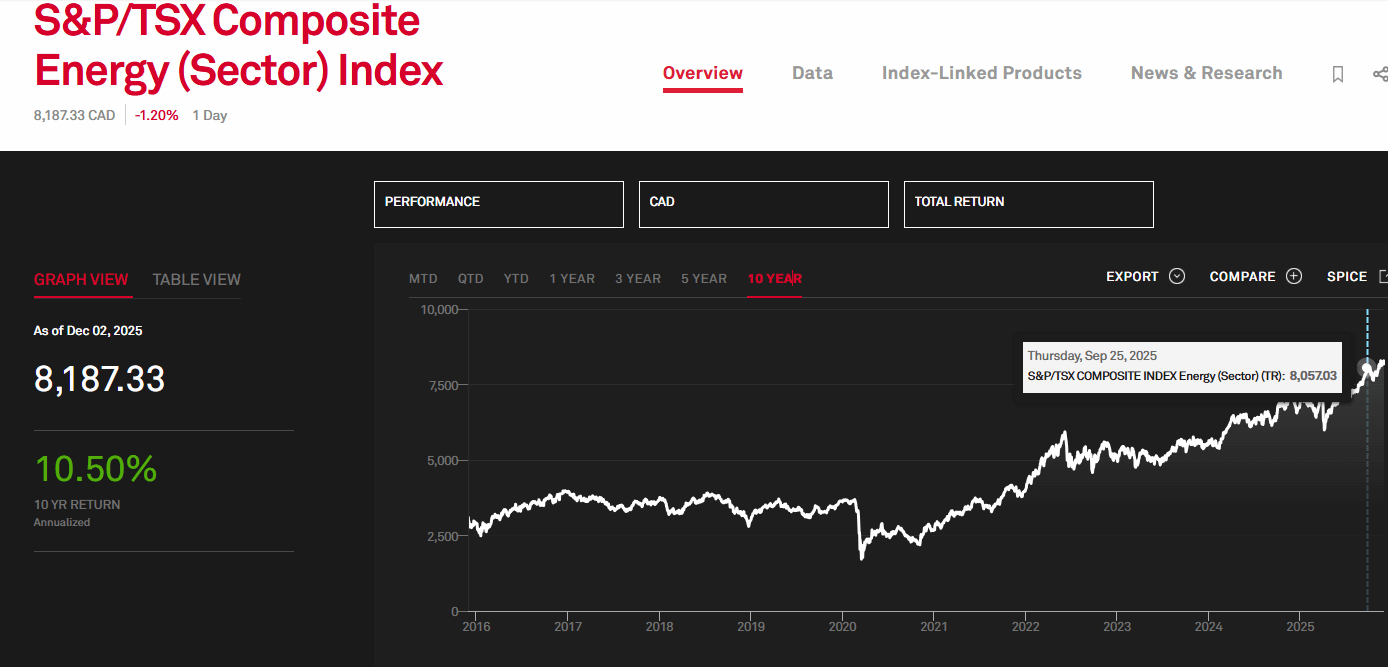
Meanwhile the market has issued its verdict. Canadian energy stocks have dramatically outperformed global peers. The TSX Energy Index is up 19.5 percent year-to-date, compared to just 6 percent for the S&P Energy Index. Falcon Oil & Gas is up 147 percent; Tamarack Valley, 66 percent; Imperial Oil nearly 62 percent on the back of record output at Kearl—the highest in thirty years. These are not the returns of a declining sector. They are the returns of a basin entering the financial imagination of global capital, precisely at the moment when its political owners began divesting from it.
