Between Friends
How two of the United States Allied are heading for war & what this means for energy

“Most quarrels amplify a misunderstanding.” — André Gide
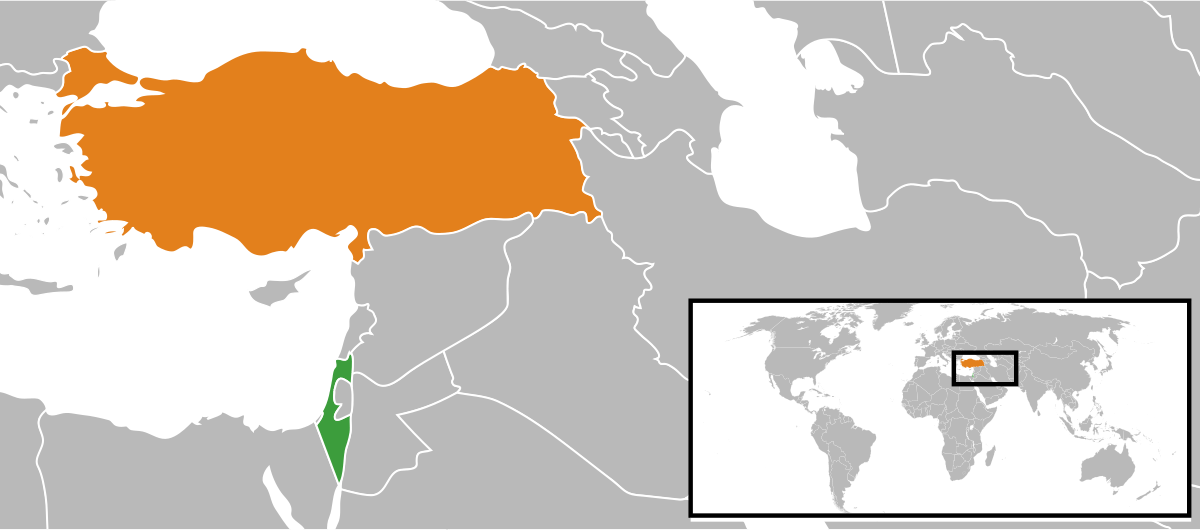
In the labyrinth of Middle Eastern geopolitics, few relationships have been as volatile as the one between Israel and Turkey. Once pragmatic partners in trade, intelligence, and regional security coordination, the two U.S. allies are now locked in a strategic rivalry whose consequences stretch from the Golan Heights to contested drilling blocks in the Eastern Mediterranean.
The immediate theater is Syria — not because Damascus is the prize, but because the country serves as a military chessboard where both powers maneuver for leverage: bases, buffer zones, proxy control, and lines of influence. Underlying these moves is the real currency of the contest: energy. Large offshore gas finds, competing EEZ claims, and the question of which routes will replace Russian and Iranian supplies in Europe drive strategic calculations. This combination of military posture and economic interest forces Washington into an awkward balancing act: protect NATO cohesion and European energy security while allowing Israel and Turkey space to secure critical national objectives. Missteps could do more than spark a bilateral clash; they could fracture alliance politics, disrupt energy supply routes, and reshape the strategic environment of the Eastern Mediterranean for a generation.
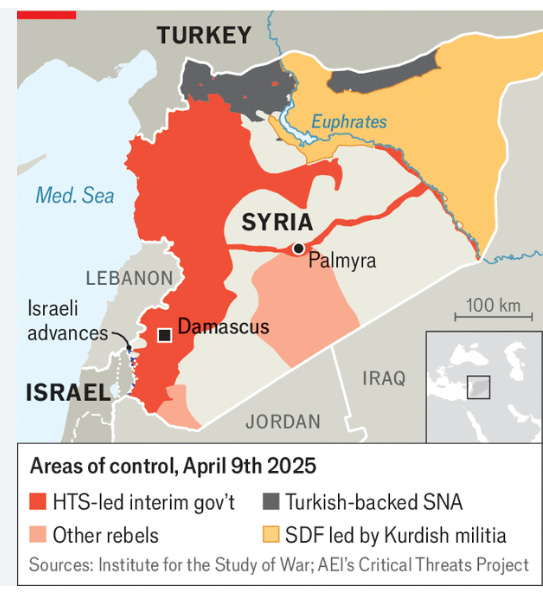
By late 2024, Assad’s hold over Syria’s capital and major urban centers had effectively collapsed. The remnants of the regime retreated to isolated enclaves, leaving the country divided among local militias, Kurdish forces in the northeast, and a Turkish-backed authority in northern and central Syria.
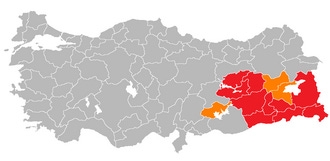
The Turkish-backed administration represented a profound shift. By establishing governance structures, Turkey not only filled the vacuum left by Assad but also secured leverage over military, political, and logistical decisions within its zone of influence. This consolidation resolved one of Ankara’s longstanding headaches: the PKK, which had long posed a cross-border security threat, was effectively neutralized, freeing Turkey to pursue broader regional objectives.
