Atoms for Bitumen
The Quiet Energy Bargain Emerging Under USMCA

“Energy is the fundamental currency of the universe.” — Vaclav Smil
The perceived misconception—if one were to judge by the flood of announcements coming from Washington, the Department of Energy, the Department of Commerce, and every adjacent alphabet agency—is that the United States is entering a great nuclear construction renaissance. Media headlines imply the return of the atom. Investors speak as though the concrete is already curing. Politicians talk as if reactors are about to rise across the continent the way Liberty Ships once slid down American dry docks during the Second World War. That is not what is happening. What the United States is actually experiencing is a renaissance in nuclear regulation.
America is not yet rebuilding the industrial machinery required for rapid, repeatable, mass-scale nuclear deployment. What Washington is rebuilding first is the legal and regulatory architecture necessary for such a deployment to become possible at all. The United States is simplifying licensing pathways, consolidating reactor approvals, standardizing reference designs, accelerating environmental reviews, and restructuring financing channels around a smaller set of technologies. The effort underway is less a construction boom than a political and institutional attempt to create the conditions under which one could eventually occur.
Ironically, the last true American nuclear buildout emerged from another energy crisis involving two of the same countries now sitting at the center of geopolitical tension: the United States and Iran. The oil shocks of the 1970s forced Washington into a strategic reappraisal of its energy system. At the time, oil was still burned in large quantities inside power plants. American electricity generation remained directly exposed to crude markets in a way that now feels almost alien. When the Iranian Revolution and the second oil shock detonated across the global economy, the United States responded not merely with diplomacy or military posture, but with infrastructure. Nuclear construction accelerated because policymakers feared hydrocarbons themselves were becoming unreliable. Hubbert’s Peak hovered over the period like scripture. Energy scarcity was treated as inevitable. The solution became diversification through atomic power.
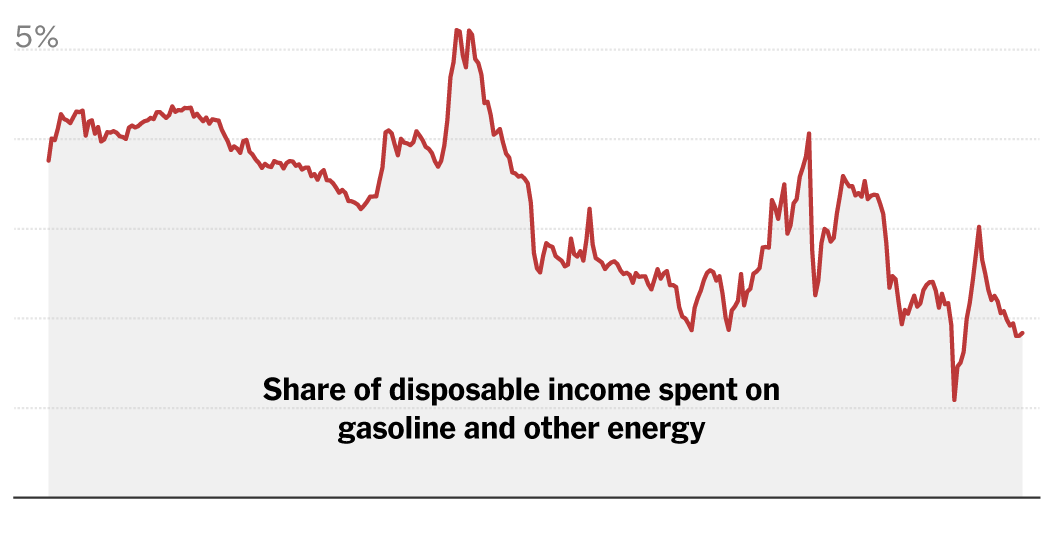
Today the conditions are almost inverted. The United States is awash in hydrocarbons. It is the world’s largest combined producer of oil and natural gas. Its economic system is far less sensitive to crude price shocks than it was during the Carter era. Combined-cycle gas turbines remain extraordinarily cheap to deploy relative to nuclear facilities. The economic pressure that forced utilities into atomic construction fifty years ago does not presently exist in the same form.
Which is precisely what makes the current regulatory push so interesting.
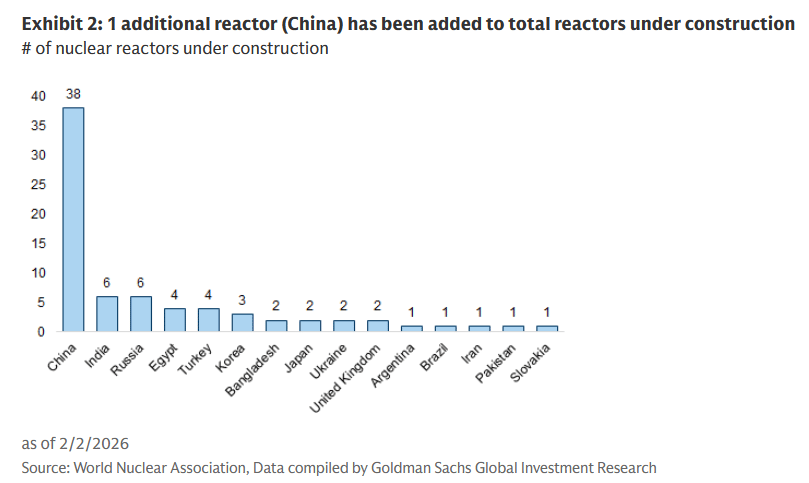
Unlike China—which has developed a highly standardized, state-directed nuclear construction model capable of deploying reactors at industrial speed—the United States still lacks a comparable buildout machine. China builds reactors the way modern industrial powers build container ships or high-speed rail. Designs are standardized. Supply chains are vertically coordinated. Financing flows through state-controlled channels. Construction teams move from project to project with accumulated institutional memory intact. Delays still occur, but the broader architecture is optimized around repetition.
The United States does almost the opposite.
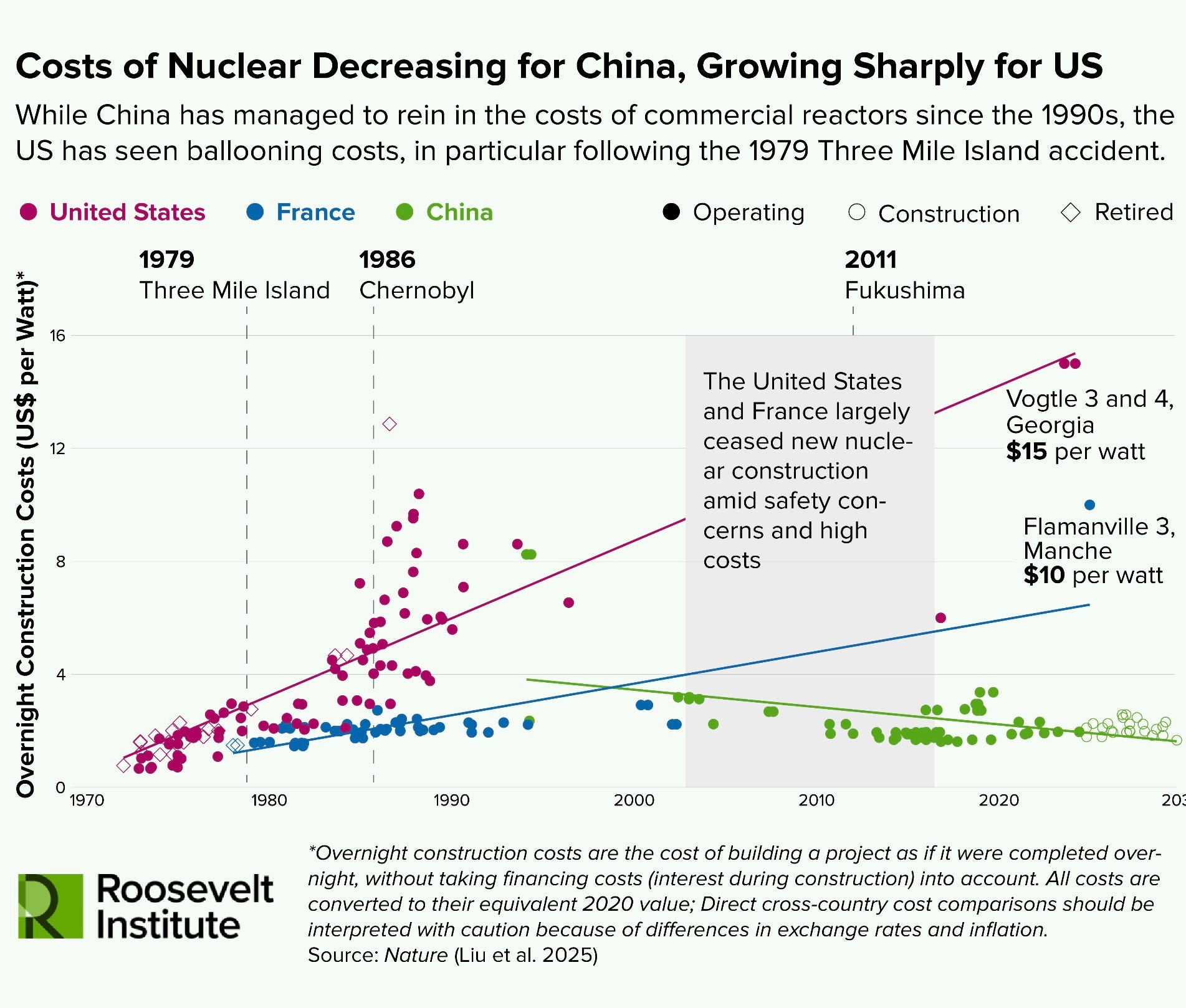
American nuclear construction remains dominated by custom-built, large-scale projects assembled through fragmented regulatory, financial, and contractor ecosystems that historically produce delay, cost overruns, redesign disputes, and political risk. Every reactor becomes partially bespoke. Every licensing cycle turns into a legal negotiation. Supply chains remain thin. Skilled labor pools disappear between projects. Components are sourced through industrial networks that have spent decades shrinking rather than scaling.
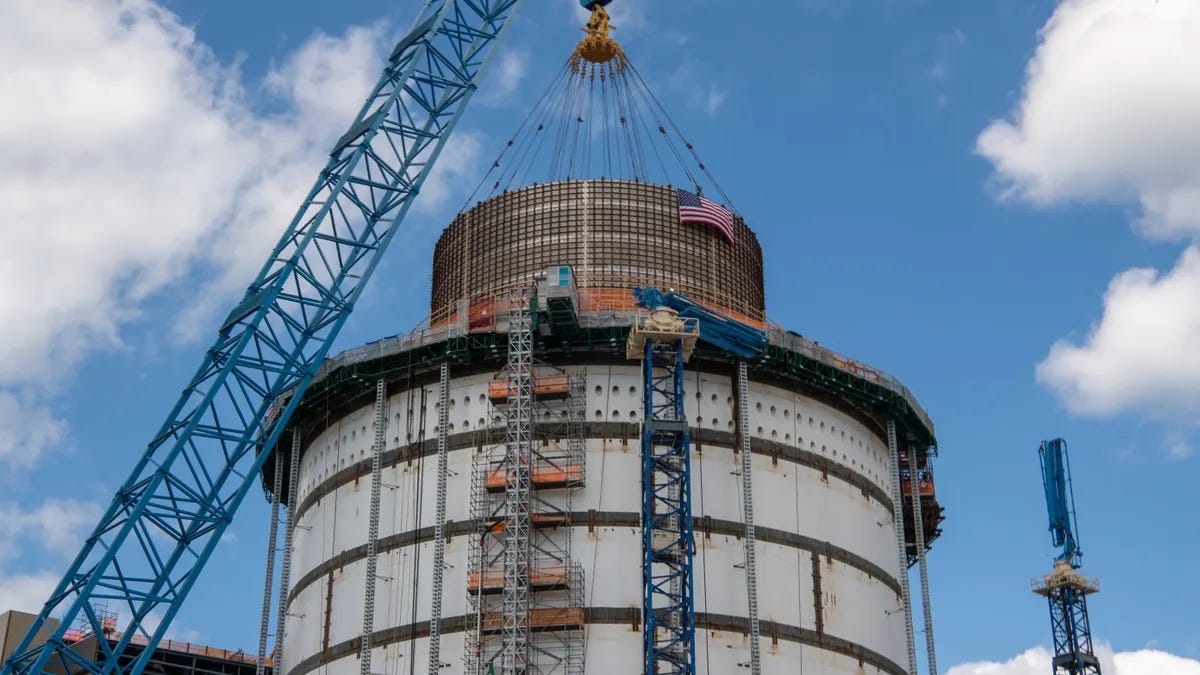
Plant Vogtle became the symbol of this dysfunction. Instead of serving as the triumphant rebirth of American nuclear power, Vogtle became a case study in why the United States lost the ability to build large reactors efficiently in the first place. Costs exploded. Timelines stretched. Contractors collapsed. What was supposed to demonstrate capability instead exposed institutional atrophy.
And yet, paradoxically, Vogtle may ultimately become the foundation upon which a future American nuclear expansion is built.
